THE OMEN
SPRING 2023
LONDON, ENGLAND
PROF. AMBER BARTOSH & VANESSA LASTRUCCI
COLLABORATORS: BECKY GOETZKE, LAL AKTAS
Baynard House, voted the ugliest building in the City of London, ought to be even uglier.
In 1957, scientists declared some parts of the River Thames biologically dead due to intense pollution from London and its surrounding cities. Though the river's water quality is slowly improving, its recovering ecosystem is still under threat from climate change and continued waste dumping. Initiatives to remove debris collect more than 200 tons of plastic waste and other garbage from the River Thames every year, but much of the waste still ends up washing up on the rivers banks or flowing out to sea.
Currently, collected waste is processed at facilities on London's outskirts, keeping the problem out of sight and out of mind. This design proposes that Baynard House becomes a recycling processing center, environmental museum, and research laboratory in the heart of the City of London, displaying emerging recycling processes and environmental data through its facade and program.
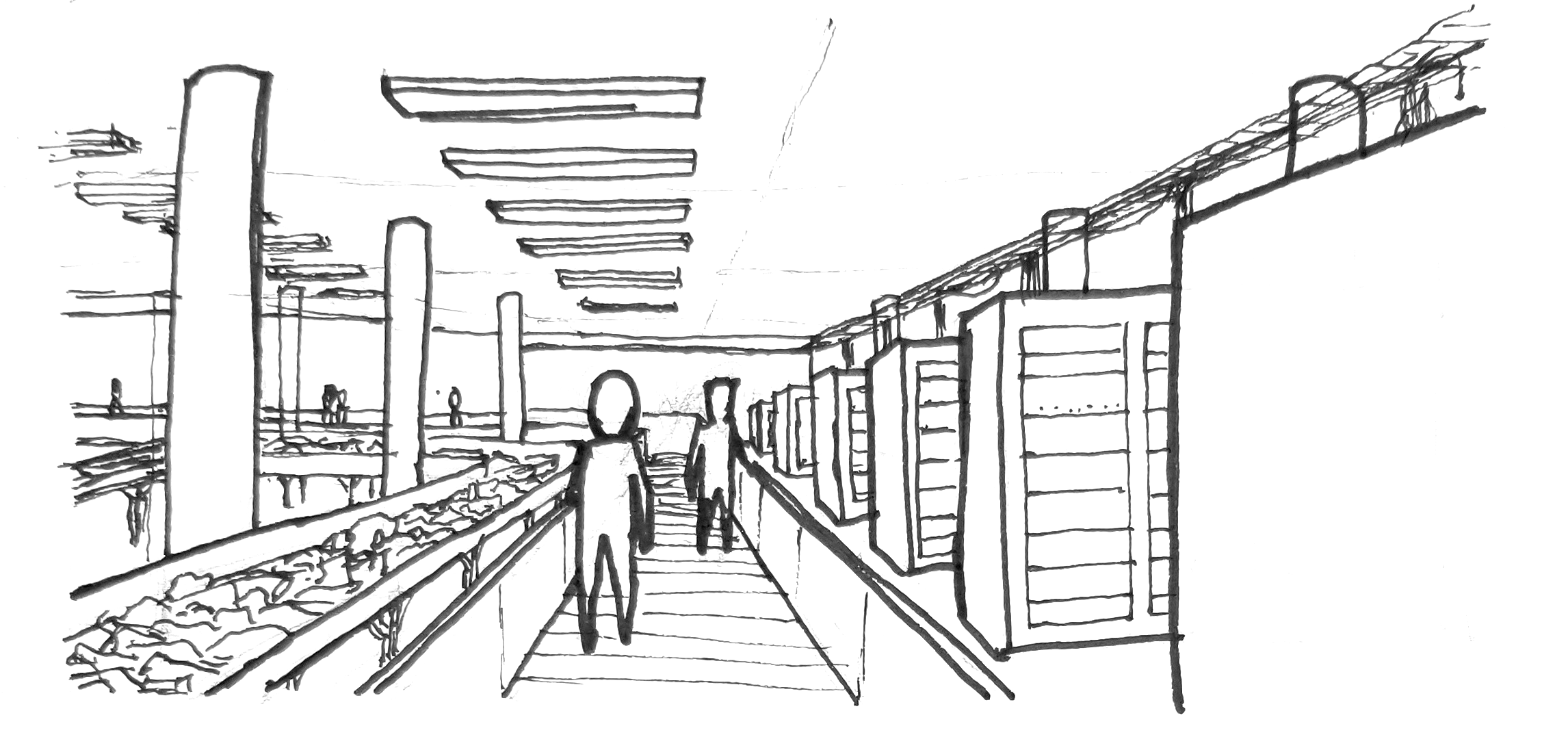
Baynard House has historically held critical telecommunications infrastructure. Presently a backbone of London's internet, the building keeps a low profile to maintain its security. Though the building has public courtyards and walks, they are difficult to access and poorly maintained because Baynard House is primarily built for the machine, not for people.
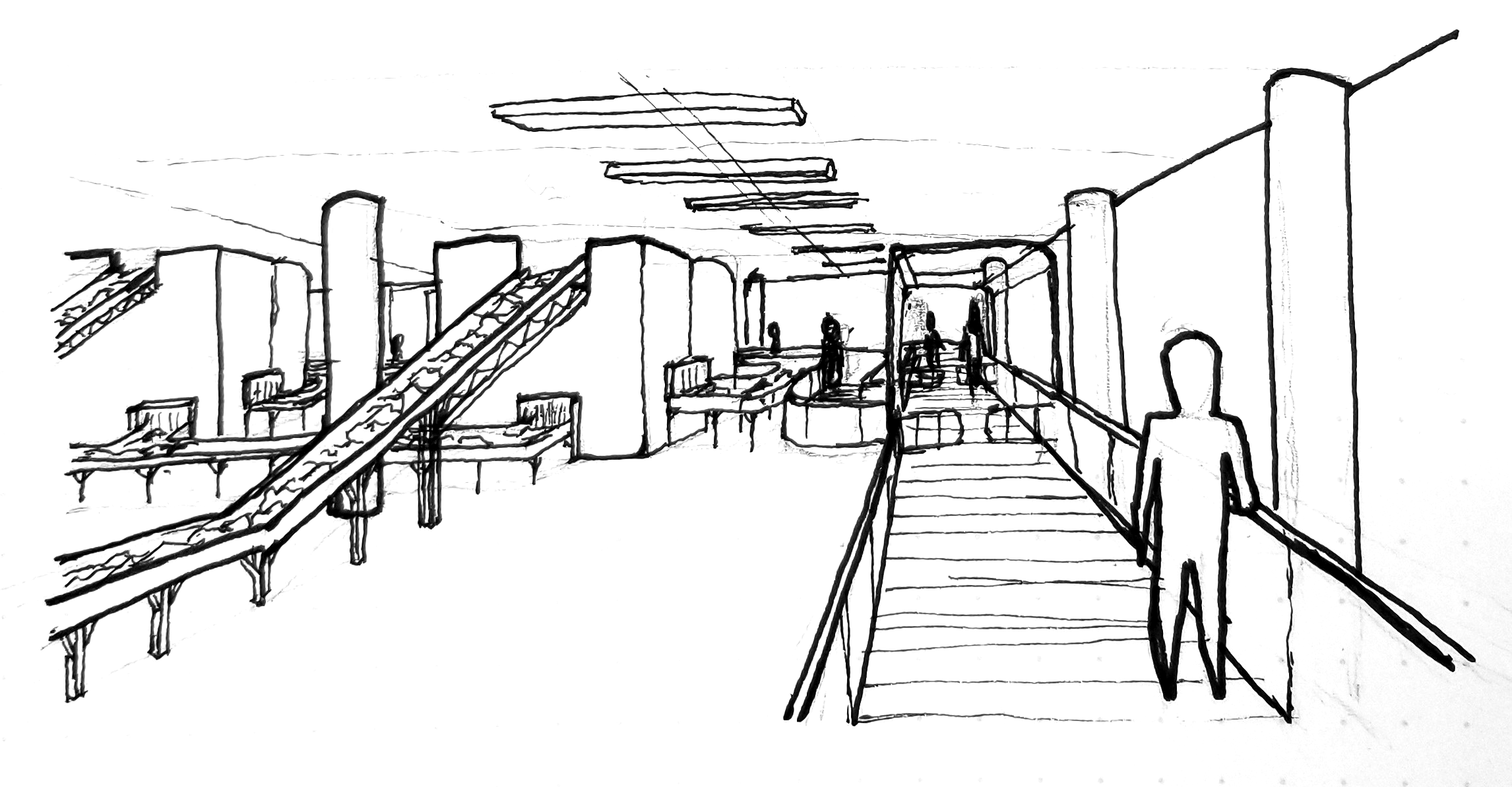
Leaning into this history and the automated nature of typical recycling plants, recyclables and museum visitors follow parallel sequences through a machine led sorting processes.
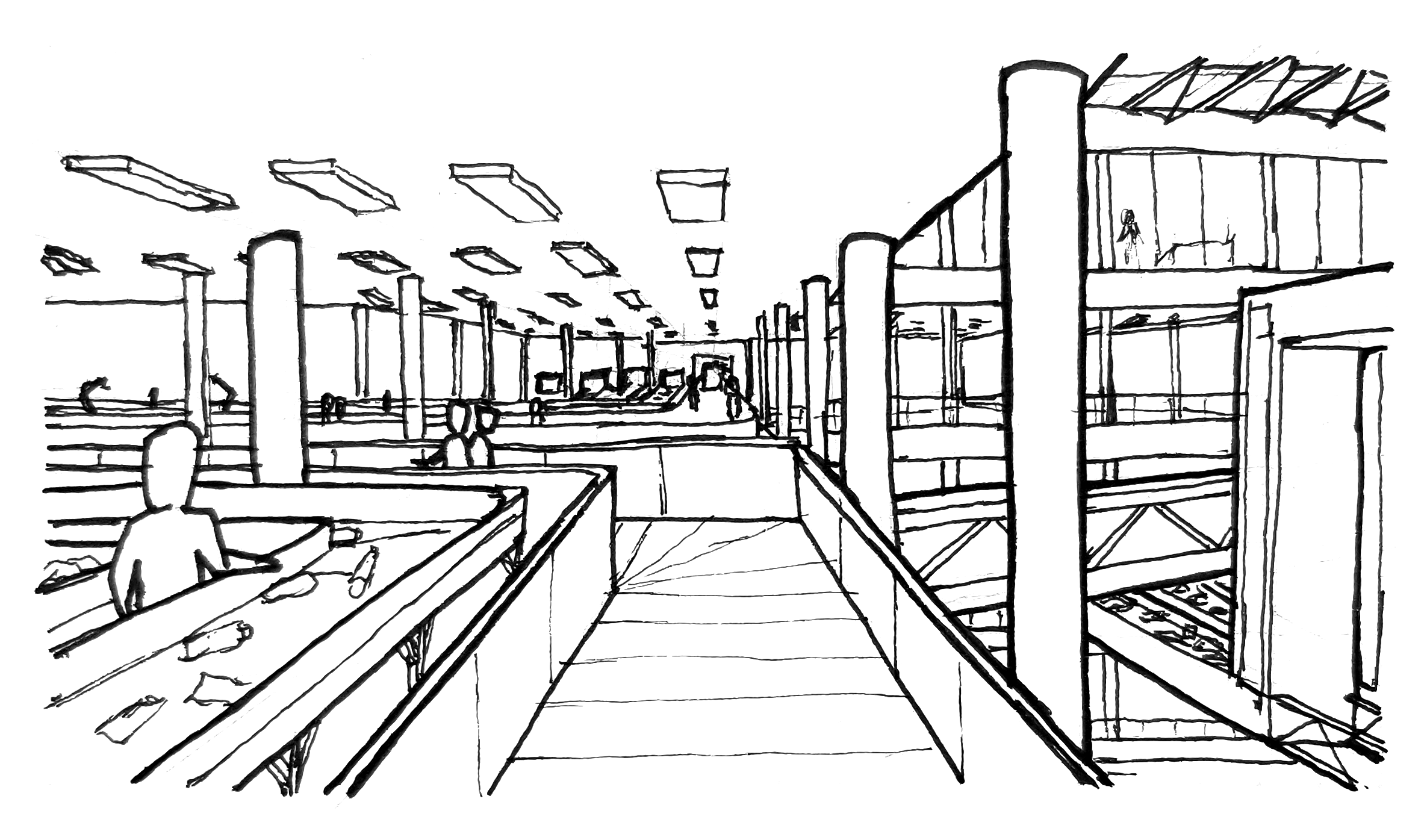
After paying admission with a donation of a recyclable item, museum-goers follow their item as it is sorted, cleaned, & processed, learning about the recycling process while traveling through an automated sorting process of their own.
On their journeys through the facility, people, waste, materials, and data repeatedly pass through a central sorting core in Baynard House's present-day courtyard. The tangled network of walkways, tubes, and cables in the core enables visitors to catch glimpses of other materials at different stages in the recycling process, providing continual reminders of the complex, mechanized systems sorting everything from people to data to plastic bottles. While they see hints of other paths in the sorting core, one must return multiple times with different material "tickets" to experience the full process occurring within Baynard House's walls.
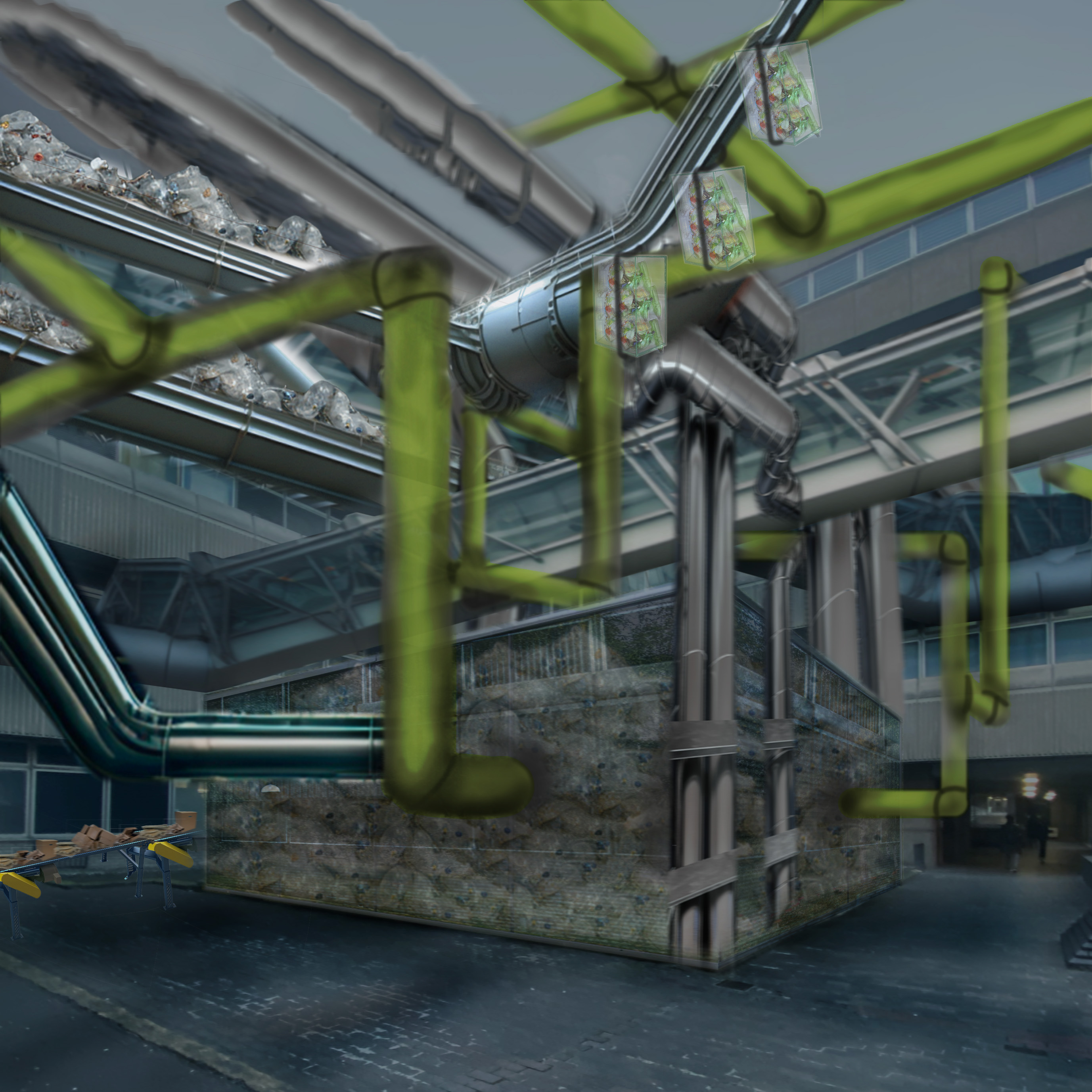
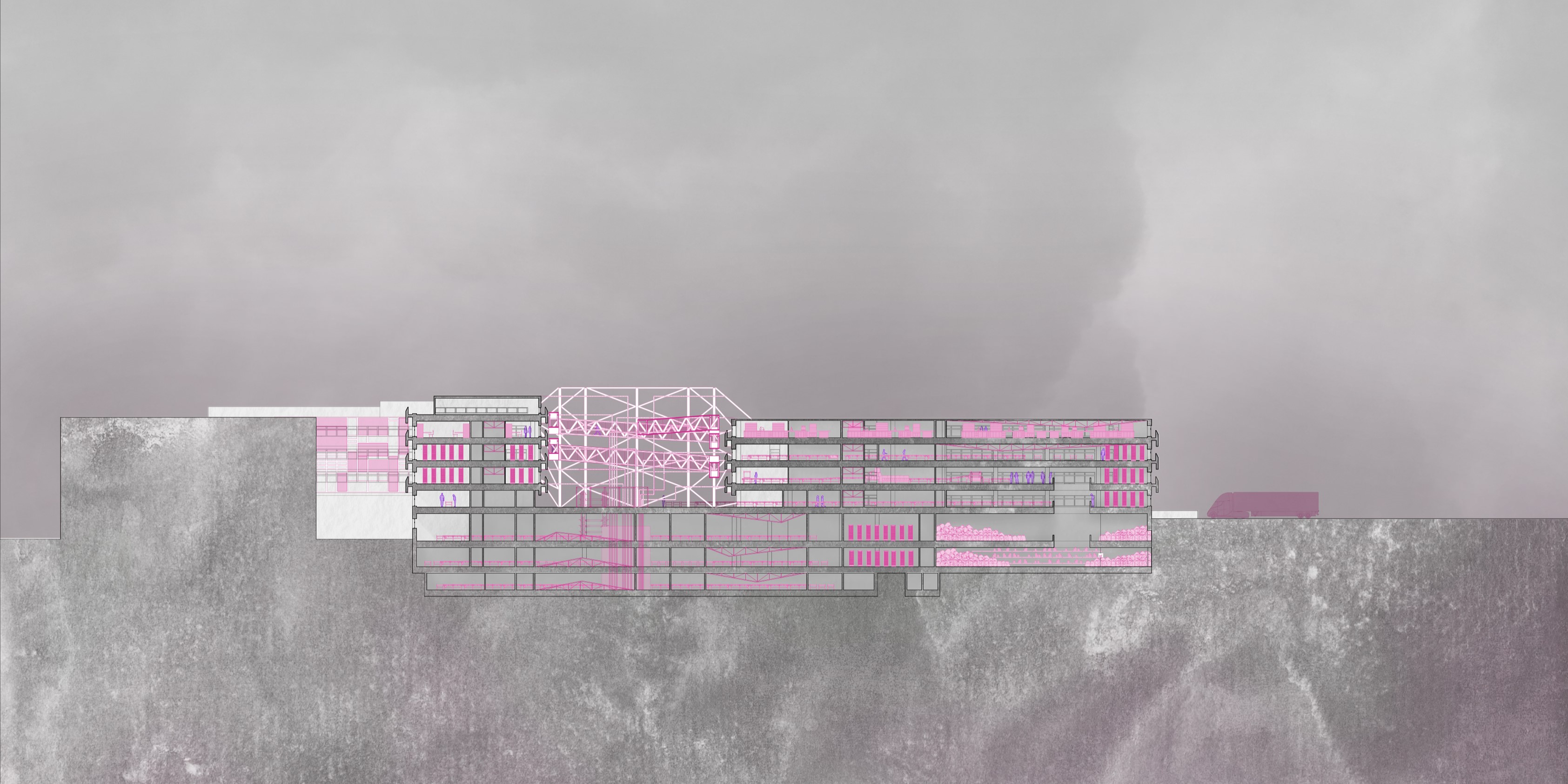
Baynard House seeks to be a fully functioning large scale recycling plant in addition to a museum, thus the inside of the building is kept relatively plain. Embracing unfinished, industrial aesthetics helps emphasize the machine and the processes while enabling recycling lines to run efficiently.
Though visitors follow different paths corresponding to their recyclable materials, they all reunite on the top floor research lab, where one can observe scientists working on cutting edge recycling processes and learn more about the building, recycling, and sustainable materials. Critically, the research floor lacks automated conveyance infrastructure and machine driven sorting, highlighting people as the leaders of innovation.
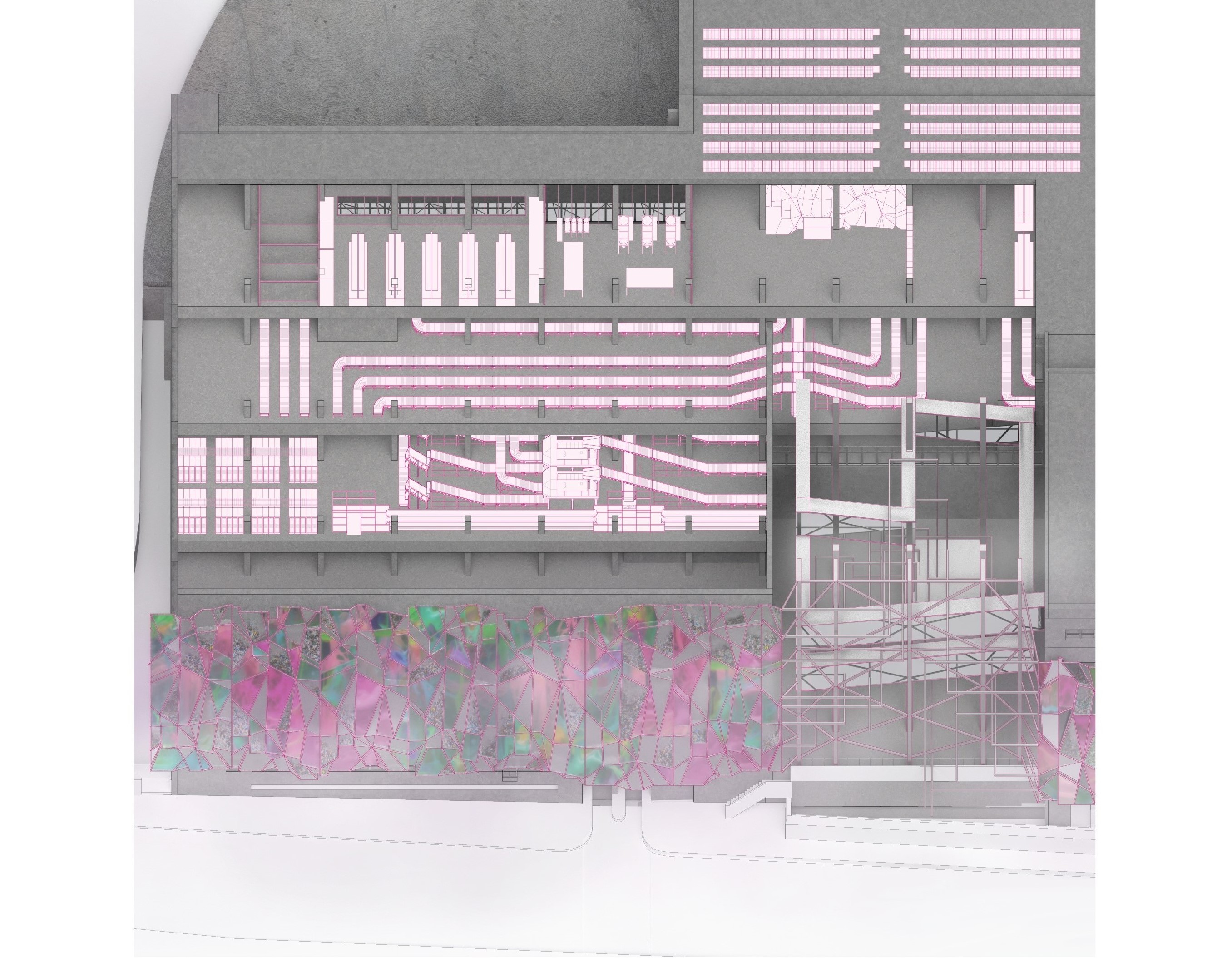
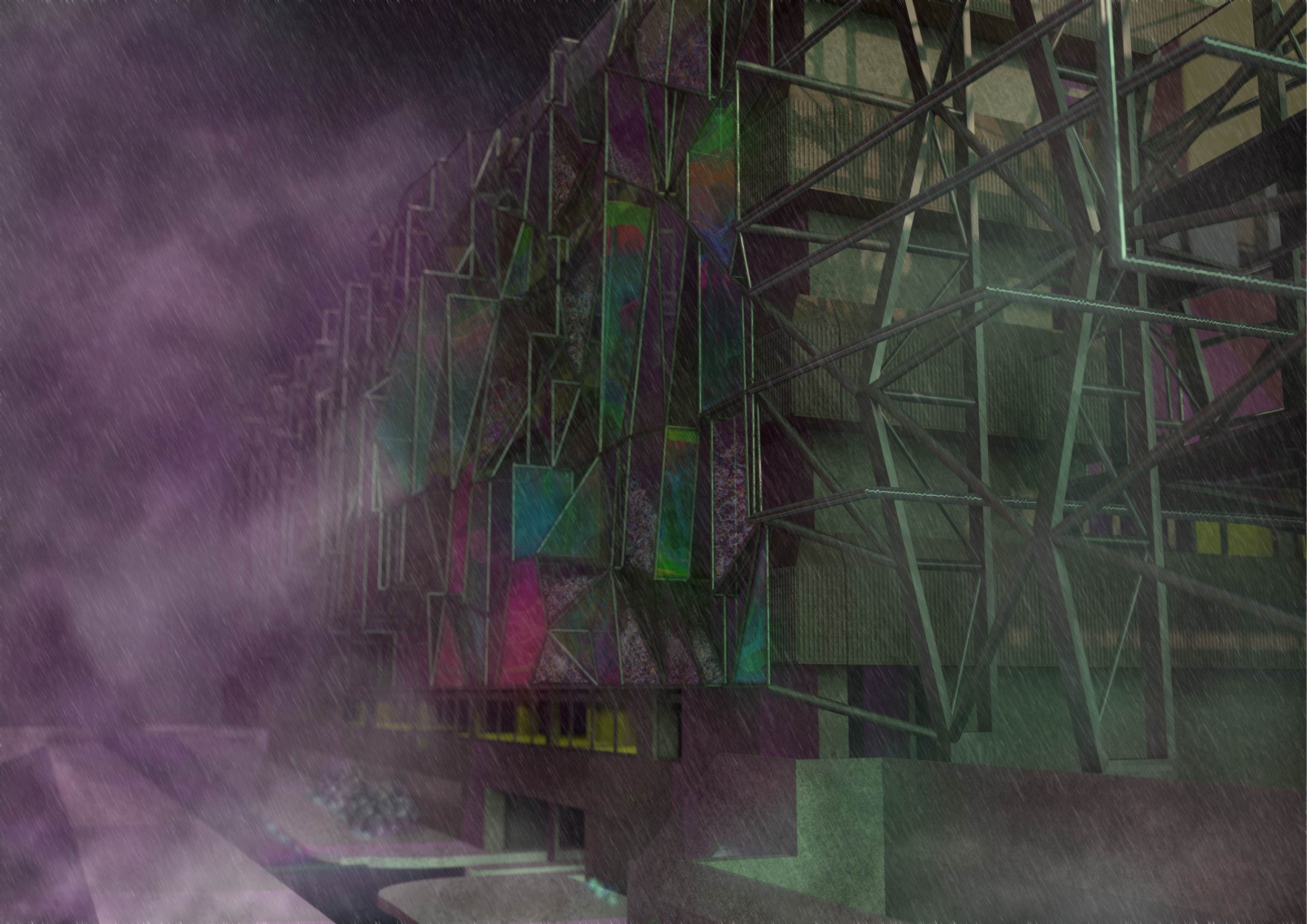
Once sorted, collected plastic waste is chemically recycled within the new bioreactor facade, an active, breathing skin to the building that displays emerging recycling processes and acts as a visual reminder to the public. In contrast to the industrial efficiency of the interior processing facility, the public facing facade takes on a more sculptural approach; inspired by the microscopic structure of plastic, the faceted panels take minute detail and blow it up to the scale of a building.
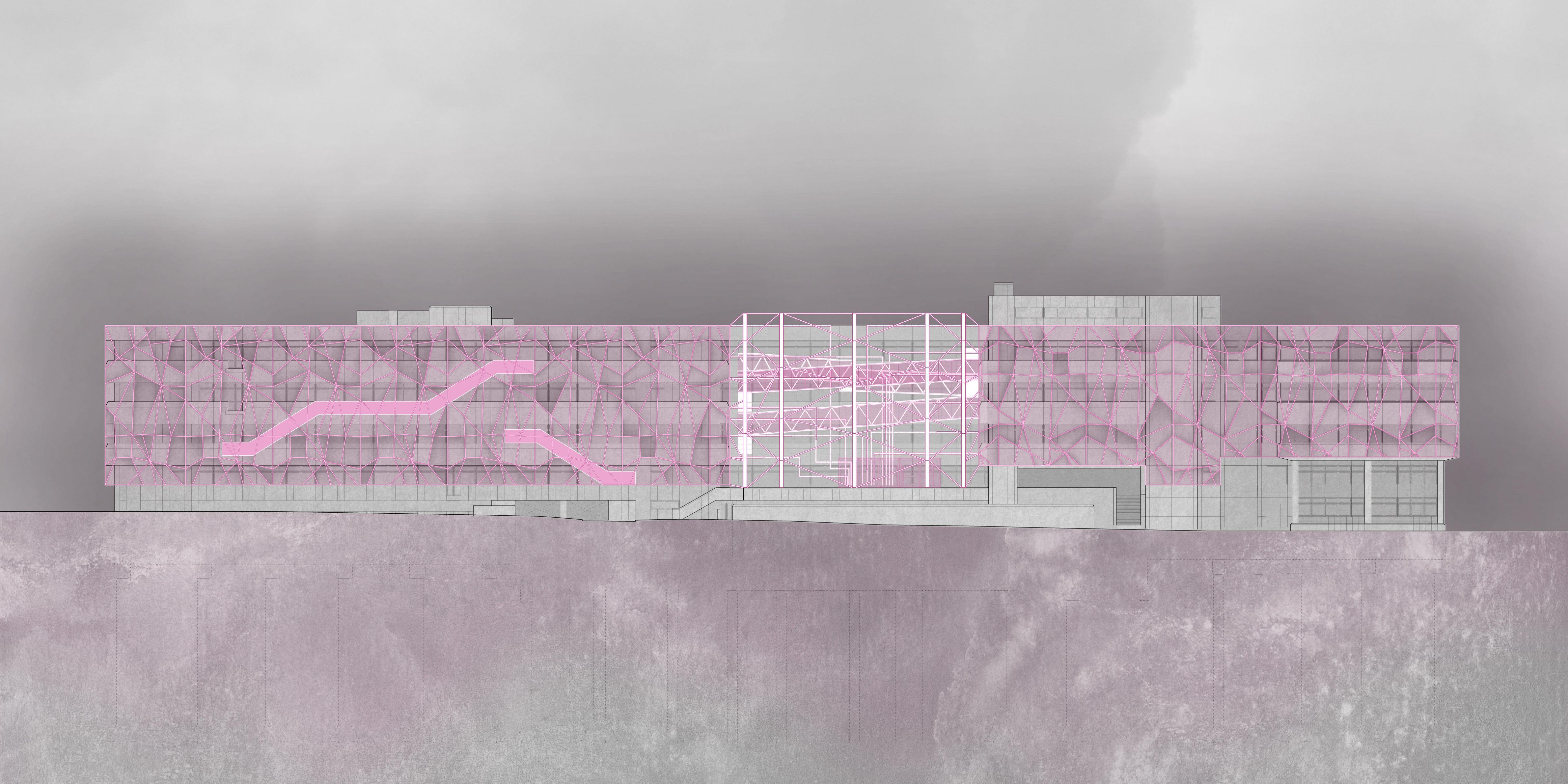
The facade is composed of a series of silicon bioreactor panels that chemically break down plastic with enzyme producing bacteria. Recyclable plastics are shredded and sent to a panel, building up over time. When a panel fills, the enzyme is introduced, breaking down the shredded plastic over the course of hours or days. Once the reaction is finished, the mixture is removed, dried, and can be used in plastic products. A suite of sensors monitor reactions within each panel, collecting data for future research & optimization. While the idea of a pulsating, waste covered facade may sound repulsive, the faceted panels construct an ever changing mural to the vital research taking place within.
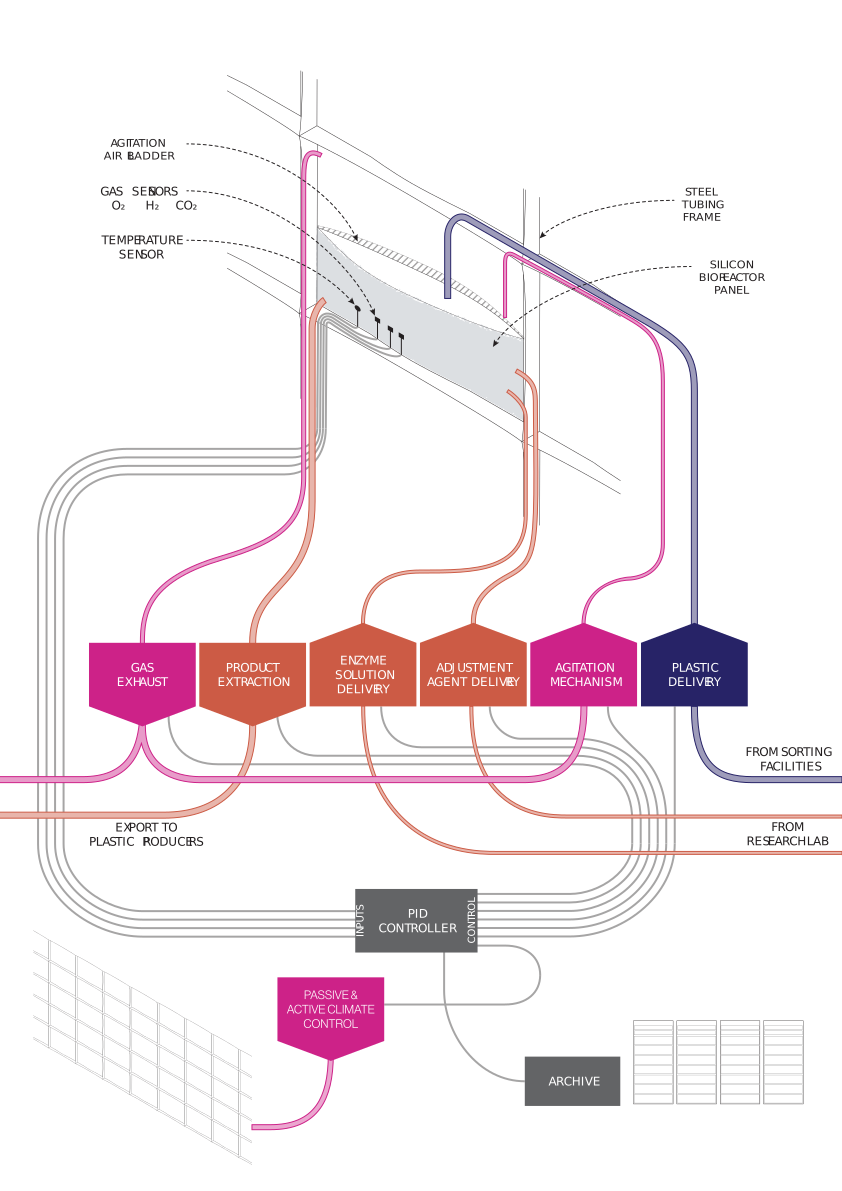
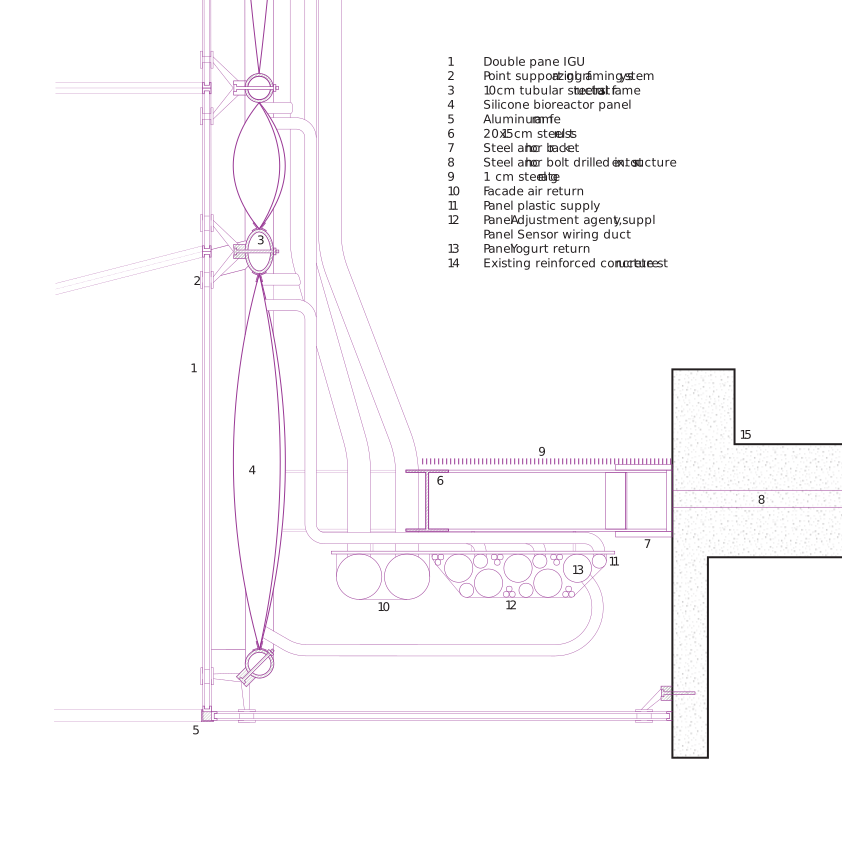
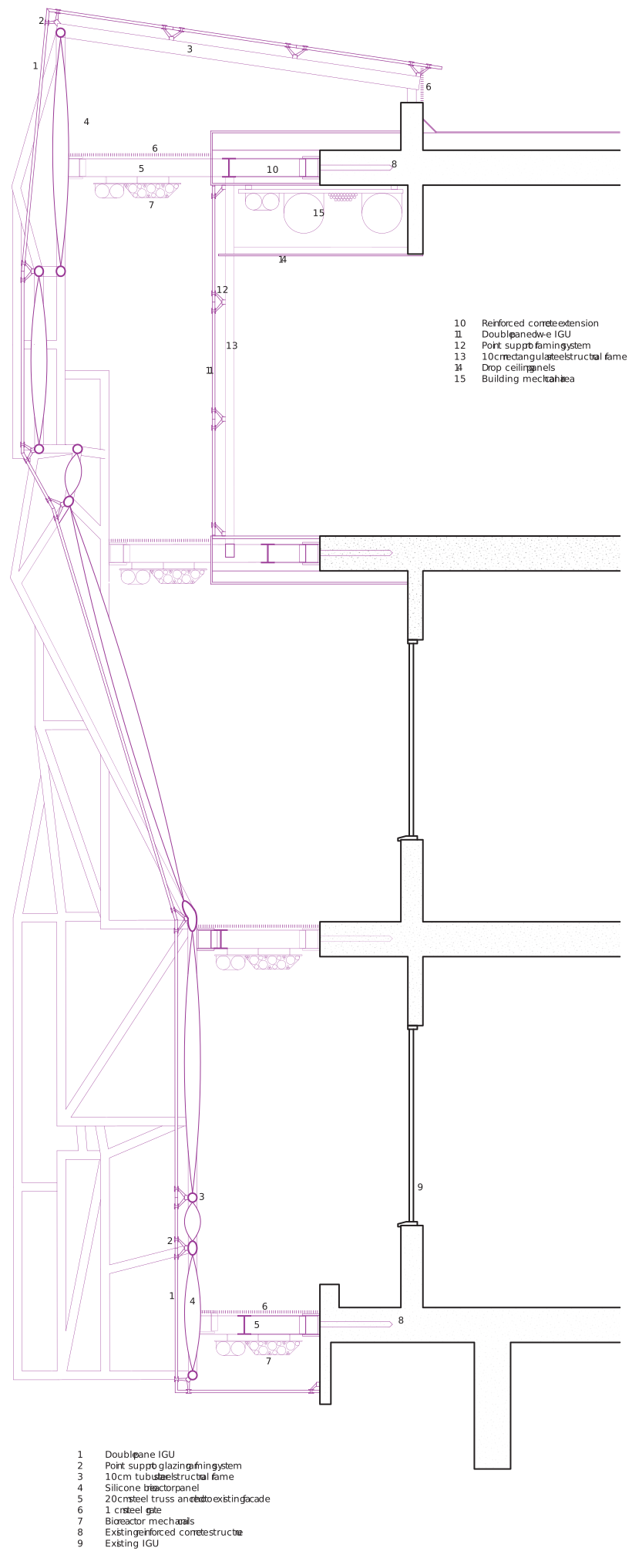
The facade is anchored to the existing building; a new steel structure supports bioreactor cells and glazing to maintain optimal reaction temperatures. An extensive network of automated pipes & wires delivering ingredients mirrors the network of sorting equipment within. At the end of its life, the panels and structure are designed to come apart for reuse or recycling should Baynard house no longer need to process recyclables.
In this proposed retrofit, Baynard House becomes a mega-archive for waste and environmental data to be processed, displayed, and stored within its walls. The building sheds its historic secrecy to publicly critique our society's dependence on plastics, unignorably championing its processes and research with built form.