MYCELIUM, TOMORROW
SPRING 2025
SYRACUSE, NEW YORK
PROF. NINA WILSON, PHD. & HANNIBAL NEWSOM
COLLABORATORS: EVELYN BROUGHTON, SILVIA DIAZ, SARAH CAWLEY
Like many dis-invested post-industrial cities in the US, Syracuse, New York faces the challenge of aging housing stock. Eighty-two percent of Syracuse's buildings were built before 1950, and have little to no thermal insulation, poor air sealing, and potentially hazardous materials, leading to uncomfortable living conditions, high energy bills, & increased operational carbon. While retrofitting existing homes with high-performance facades is a promising strategy, conventional practices involve petroleum-based materials with complex supply chains and a cradle-to-grave life cycle; Mycelium, Tomorrow argues bio-materials can be a viable alternative; this research explores how mycelium composite materials can improve aging, energy inefficient homes in Syracuse through sustainable, affordable retrofits grounded in material research.
Mycelium -the root structure of a mushroom- grows on substrates of organic matter; microscopic filaments called hyphae bind this matter into a lightweight, rigid material. By changing the composition, one can tailor the material's properties toward specific performance goals, reducing density for high-preforming insulation or maximizing durability & waterproofing for cladding.
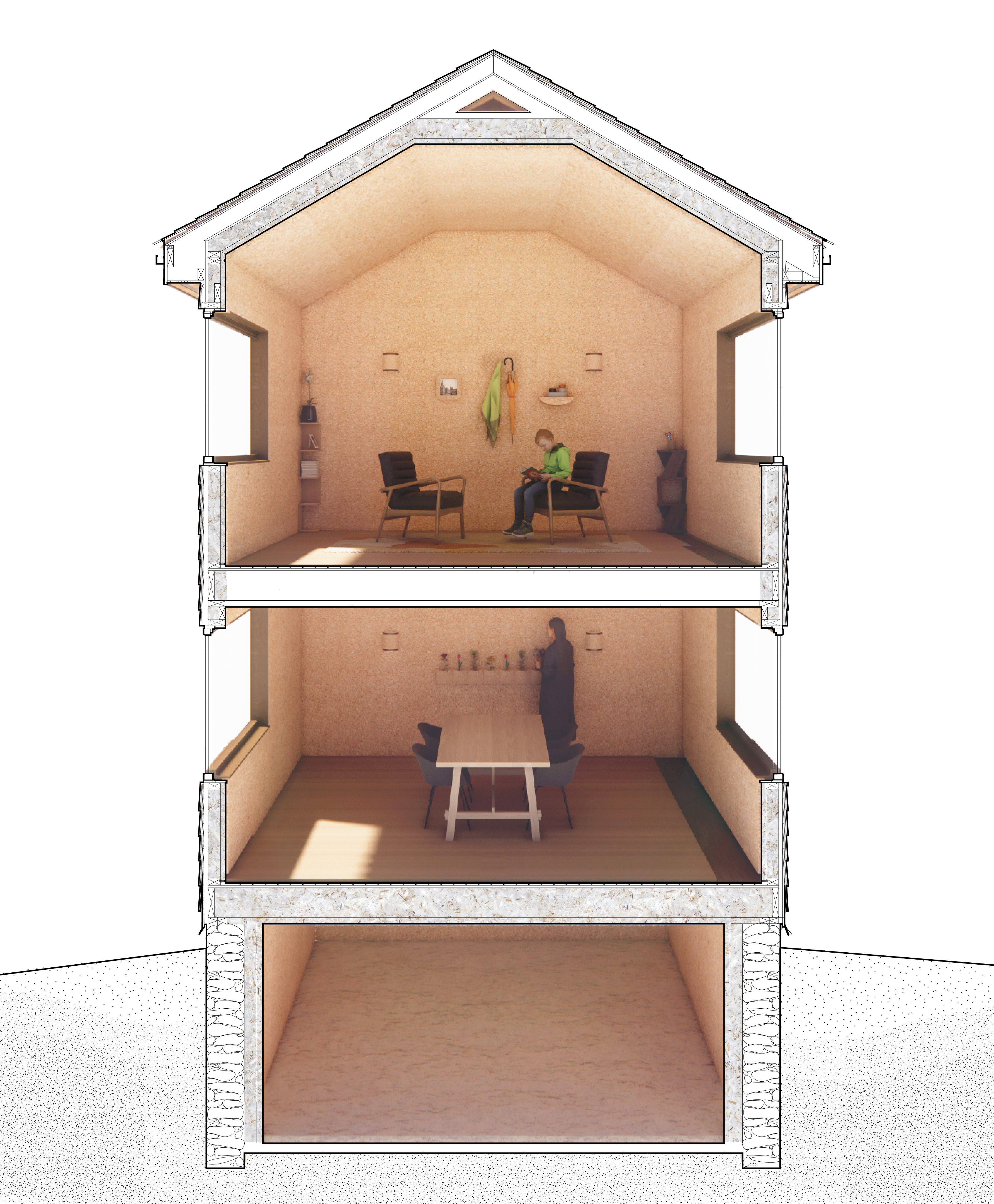
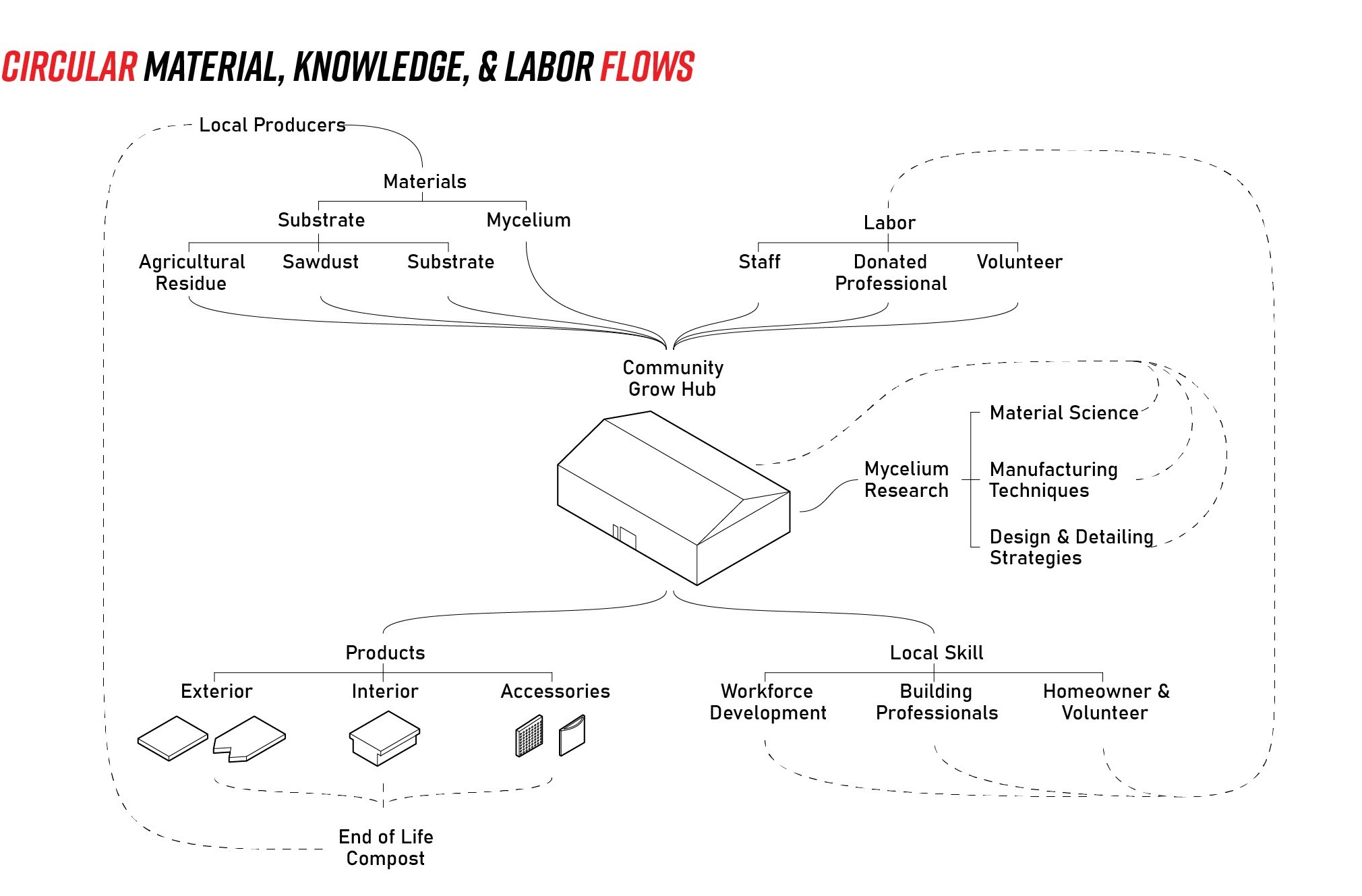
This project proposes a series of grow hubs inhabiting vacant buildings in Syracuse which become engines of a new local material & knowledge economy. These grow hubs source substrates and mushroom strains from within New York State's existing material economies, transforming sawdust and agricultural waste into biodegradable building insulation and finishing systems. At the end of a module's useful life, it can be returned to the ground, enriching the soil.
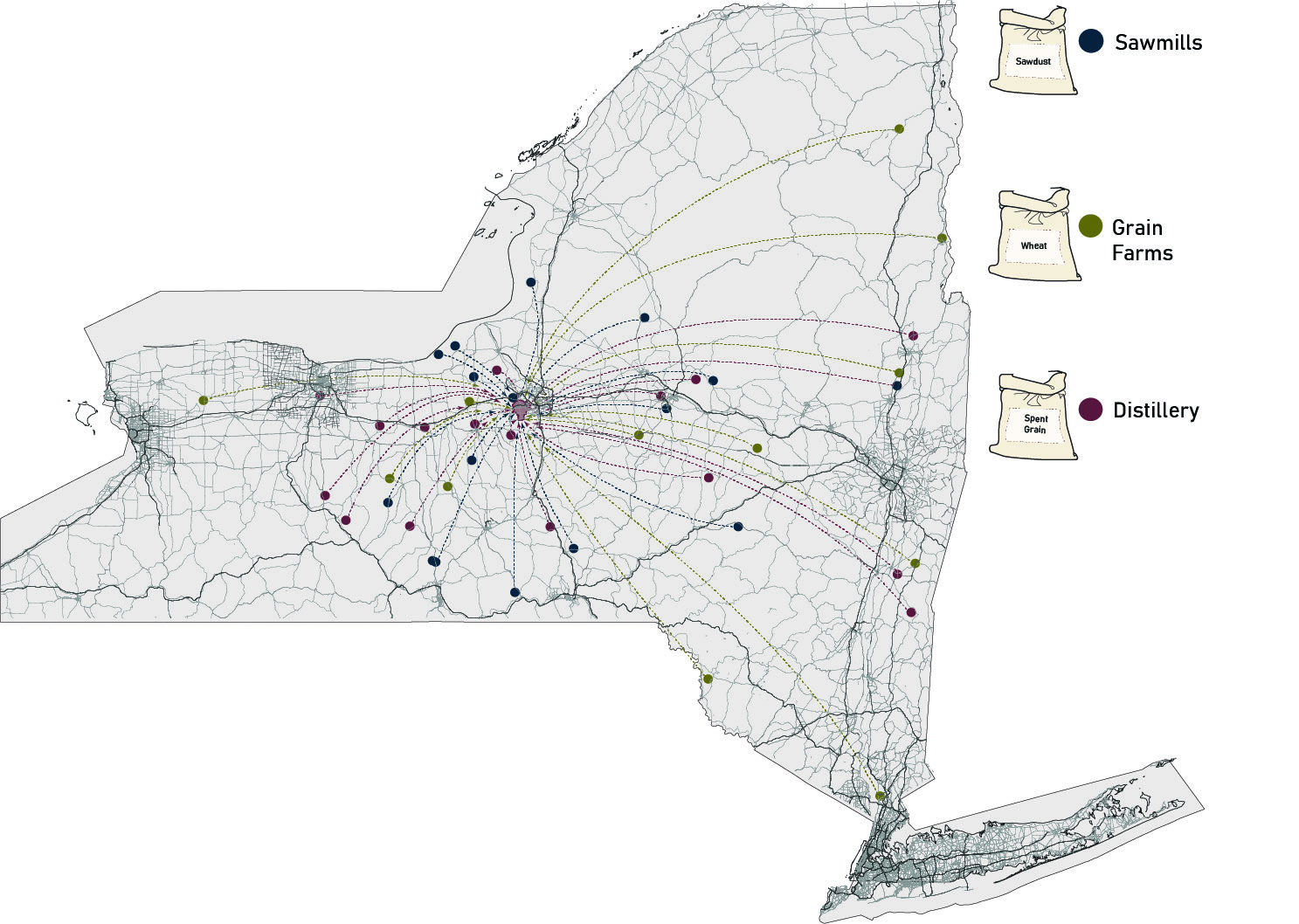
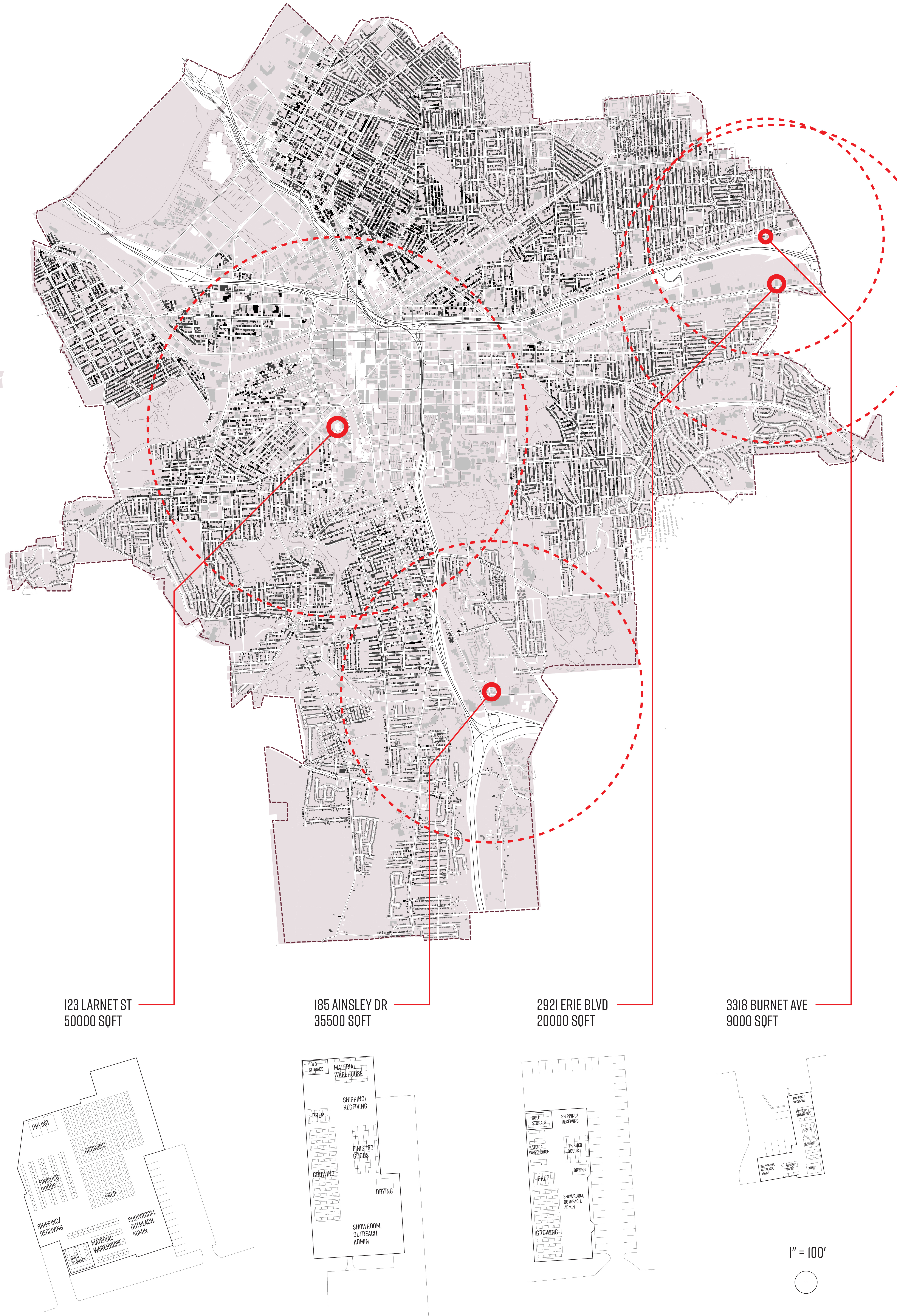
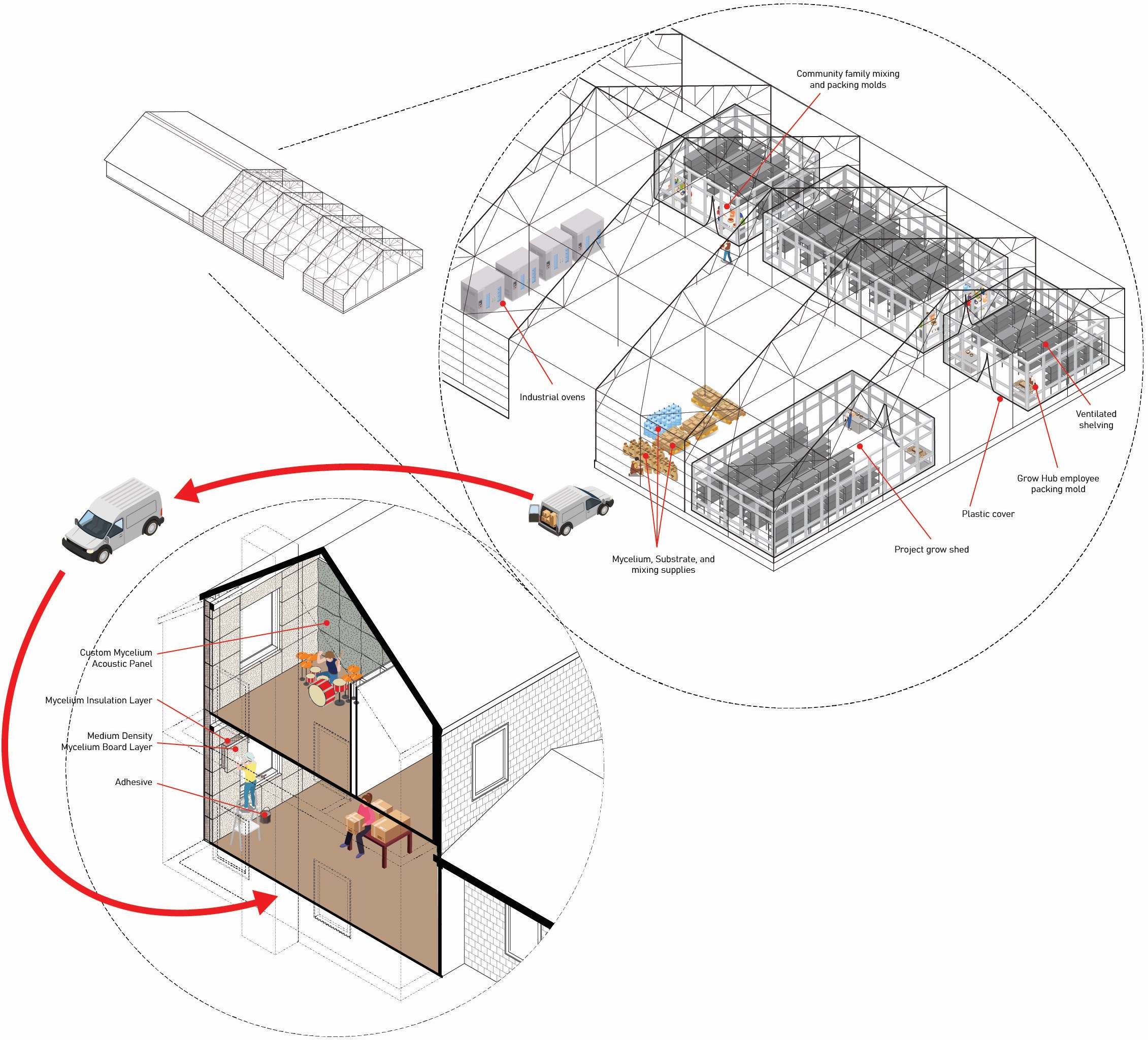
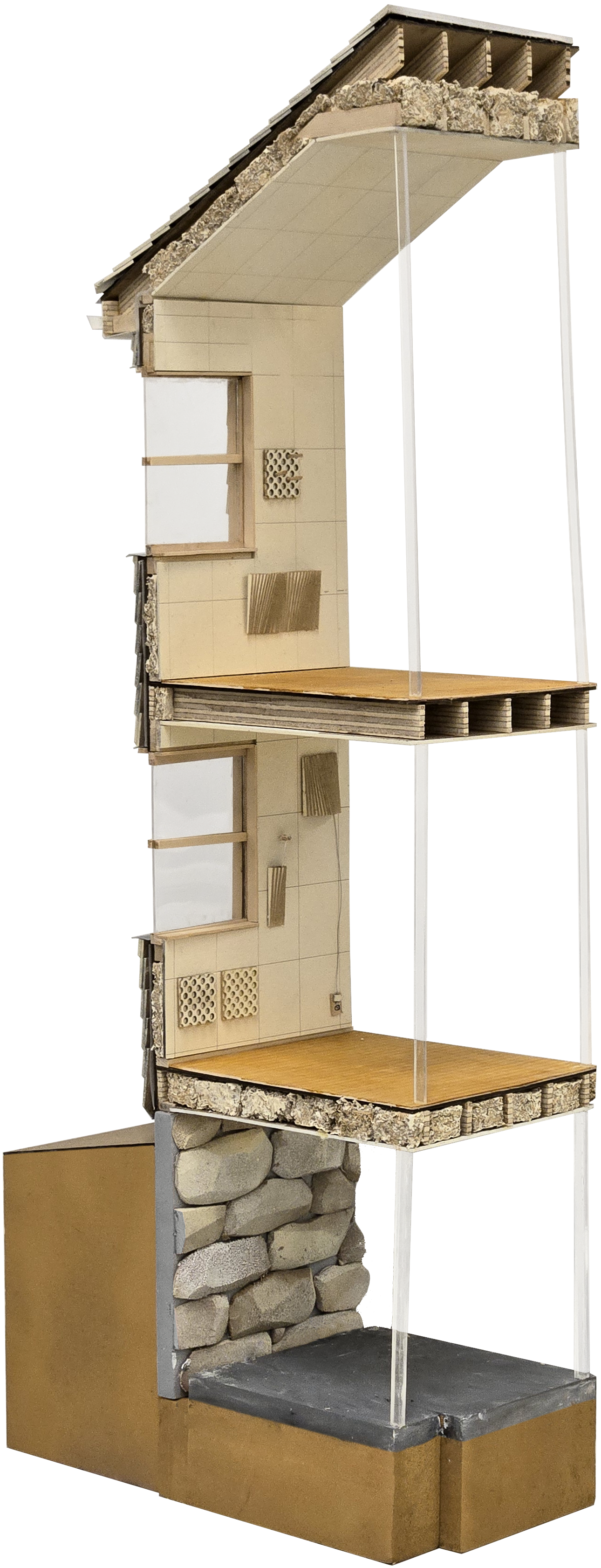
In addition to a circular material flow, grow hubs promote local building knowledge through resident workshops, industry professional trainings, and research opportunities. By sourcing local material and building community knowledge, Mycelium Tomorrow creates resilient supply chains resistant to global economic disruption.
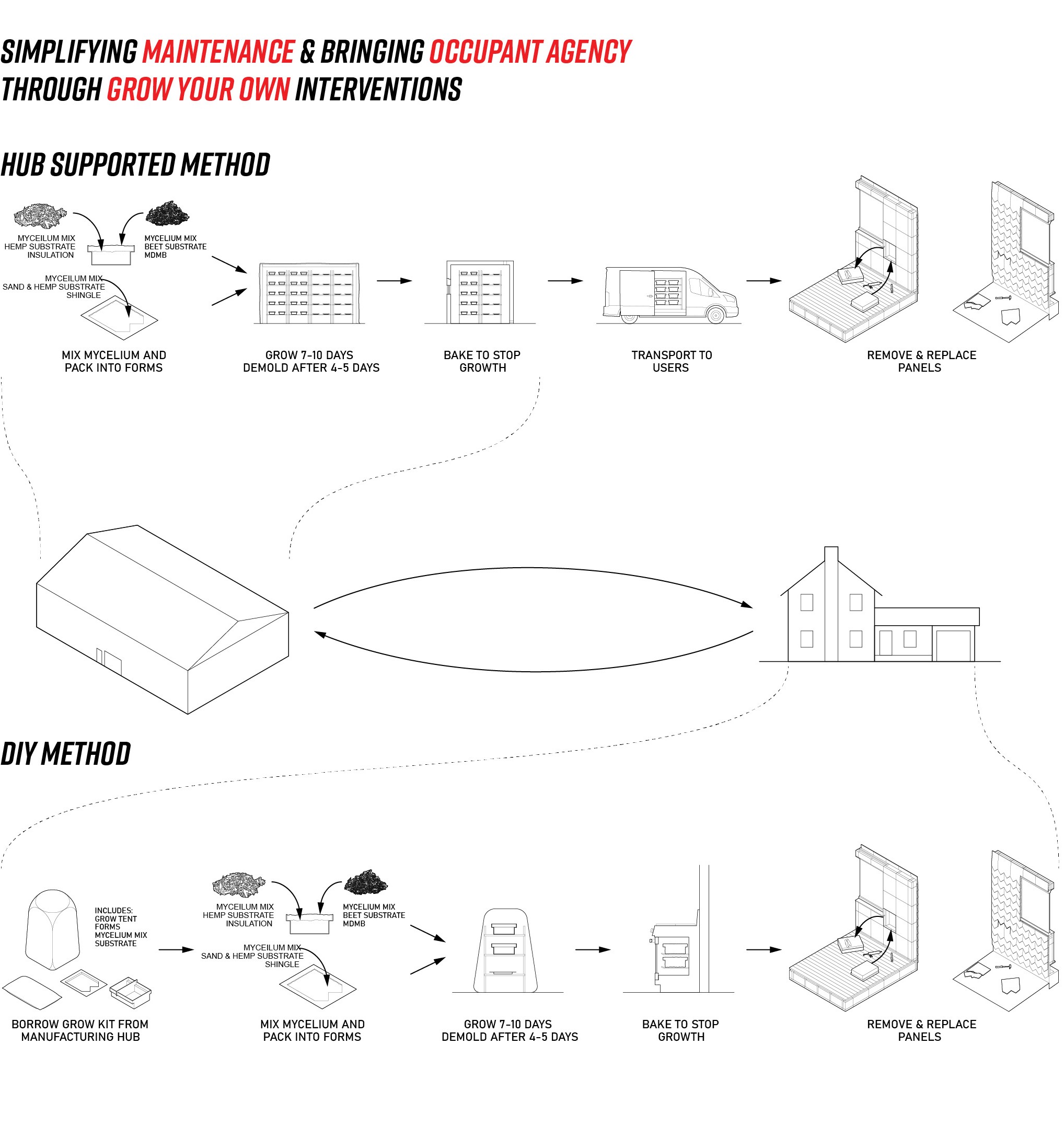
In this research studio, we demonstrated the growing & construction process through numerous prototypes and a full-scale mock up, exploring construction feasibility and identifying key material challenges such as contamination and fragility. We incorporated our findings into a 226-page, self-bound studio-wide research book. The studio's experimentation will be incorporated into a peer-reviewed paper and used for future demonstrations with the New York State Energy Research and Development Authority (NYSERDA) towards bringing a mycelium-based insulation and finishing system to the market.

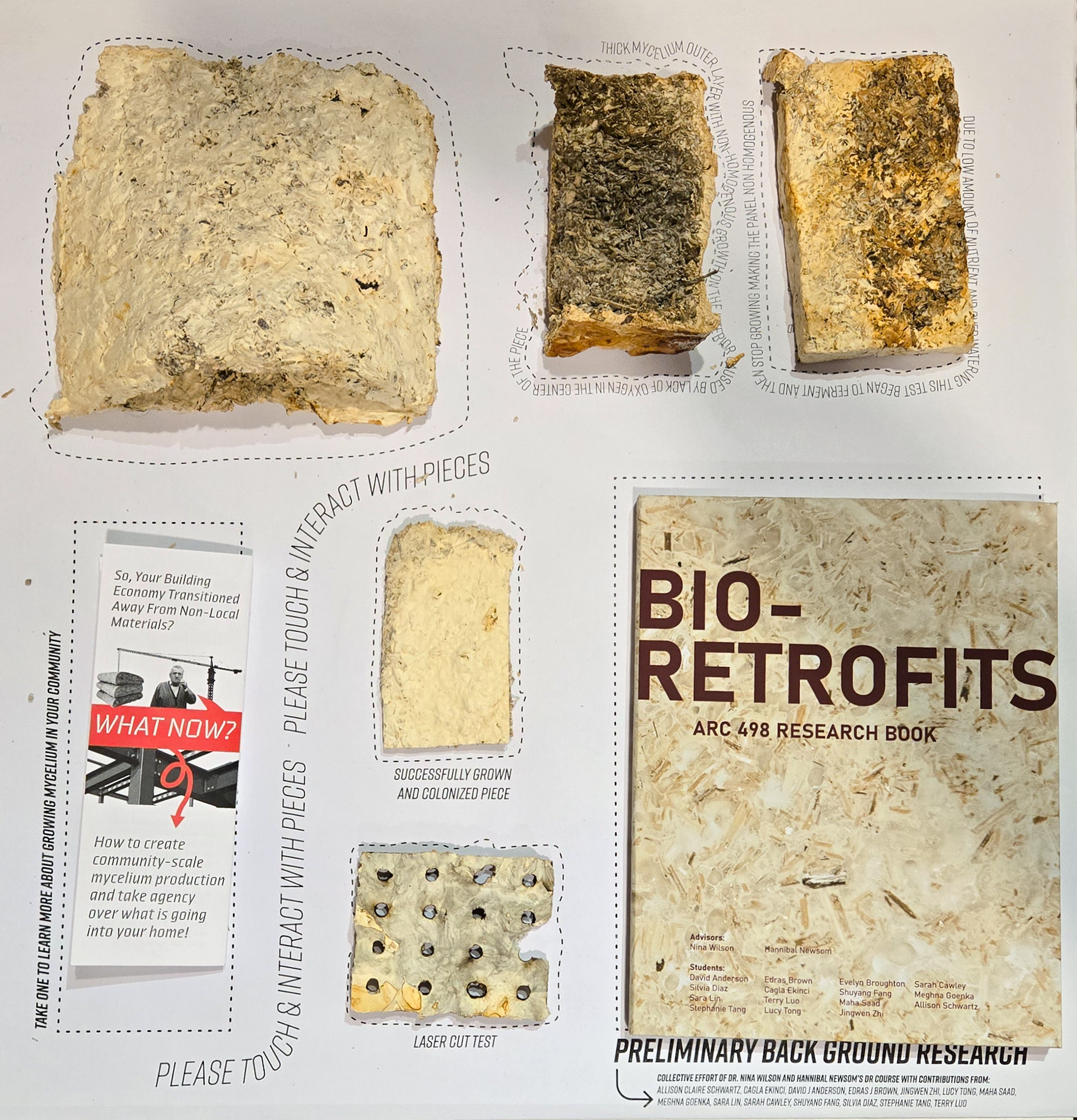
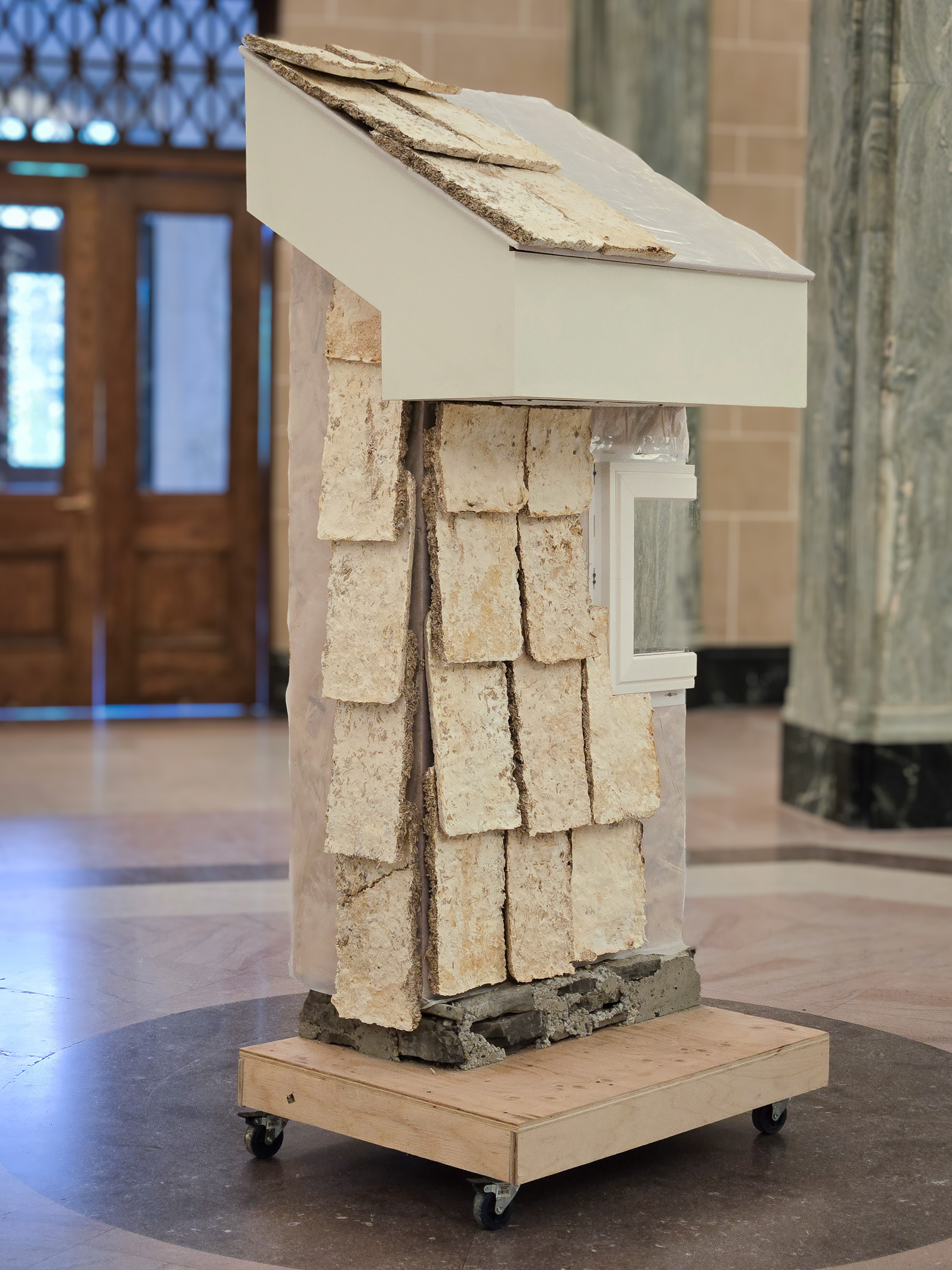
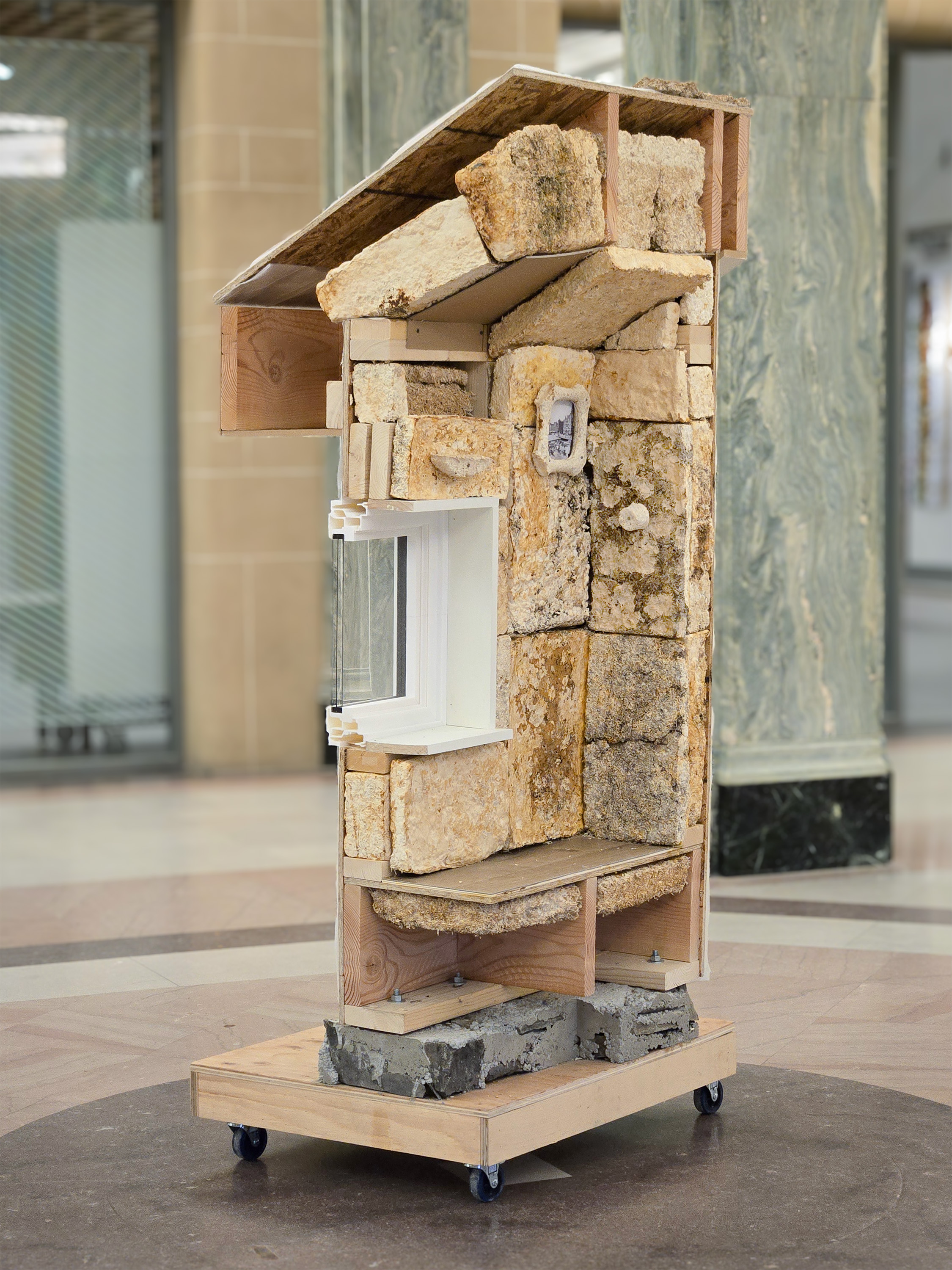
Beyond a single product, Mycelium, Tomorrow is an actionable approach for integrating bio-materials into our construction economy in the near term, taking steps toward a city where high performance housing is sustainable, affordable, democratized, and local.
Mycelium, Tomorrow was selected as a finalist in Syracuse's 2025 James A. Britton Memorial Awards and earned a Citation for Excellence in Design Research.